


A leak is not always the first sign of a roof problem.
The signs can be quite small. A ceiling tile may start showing a darker patch, leaves may build up around a drain, or water may keep sitting in one area of the roof after every rain. You might also notice an old repair not done correctly.
These things are easy to miss when the building is busy.
Winter is a different story. Getting onto a roof becomes harder when snow and ice are involved, and a repair that could have been handled earlier may become urgent once water starts getting inside.
A commercial roof inspection before winter gives you a chance to find out what condition the roof is actually in before those problems become harder to manage.
Fall Gives You a Better Chance to Deal With Problems
A commercial roof has usually had a busy few months by the time fall comes around.
It has dealt with summer heat, rain, wind, and whatever else the weather has brought along. Maintenance workers may have access to rooftop equipment. Other contractors may have carried tools or materials across the surface.

None of that means the roof has been damaged. It simply means there are plenty of reasons to take another look.
A small tear near a seam can go unnoticed. So can a loose piece of flashing or a seal that has started to deteriorate. Even something as ordinary as fallen leaves can cause trouble when they collect around drainage points.
A fall commercial roof inspection puts these things on the radar while there is still some time before winter.
What Gets Checked During the Inspection?
A person standing in the parking lot cannot tell you everything about the roof.
The surface may look fine from below while there are problems around a drain, a pipe, or a rooftop unit. A professional roof inspection before winter takes a closer look at those areas.
Start with the roofing surface
The main surface gets checked for visible damage and wear.
The exact signs depend on the roofing system, but an inspection can help identify punctures, cracks, splits, blisters, worn spots or areas where the material has changed.
Heavy foot traffic is one of the reasons to consider. The path to a rooftop unit may be used regularly, while another section of the roof is rarely touched.
Previous repairs deserve attention too.
A repair that has held up well is not a concern. But still, it is good to give it a check and ensure the repairs are in good condition. Being attentive helps deal with the deterioration before it gets worse.
Look closely at seams and flashing
This is where a roof inspection can get more interesting.
The middle of the roof may look perfectly normal, while the edges and connections need attention. Flashing around walls, vents, pipes and equipment can loosen over time. Seams can open, and sealants can become less effective as they age.
Water does not always enter from a specific spot.
For example, you see a stain on the ceiling below the rooftop unit. This doesn’t mean the unit itself is leaking. Water can flow through the roofing system before it eventually shows up inside.
That can make a small roof problem surprisingly difficult to track down without a proper inspection.
Check the drains
Leaves, dirt, and debris can collect around drains and scuppers. If enough material builds up, water has a harder time leaving the roof. Pay attention to recurring ponding as well.
A puddle that appears after a heavy storm and disappears quickly is different from an area where water accumulates for an extended period. If the same spot keeps showing up, it deserves a closer look.
Do not forget the edges
The edges of a roof are exposed to wind, rain, and temperature changes throughout the year.
Parapets, coping, and other edge details should be checked along with the main roofing surface. The same goes for areas around rooftop equipment.
There can be a lot going on around heating and cooling units, vents and other installations. Workers need access to these areas, and roofing materials can sometimes be disturbed during maintenance work.
Check what is happening indoors
The inside of the building can provide useful clues.
Maybe there is a damp smell in one room. Perhaps a fresh mark is visible on the ceiling that was not there a few months ago. Peeling paint or recurring moisture spot may also be worth mentioning. These details can help connect symptom with something happening above it.
That is why a commercial roof maintenance checklist should include both sides of the roof system.
What Can a Small Roof Problem Do in Winter?
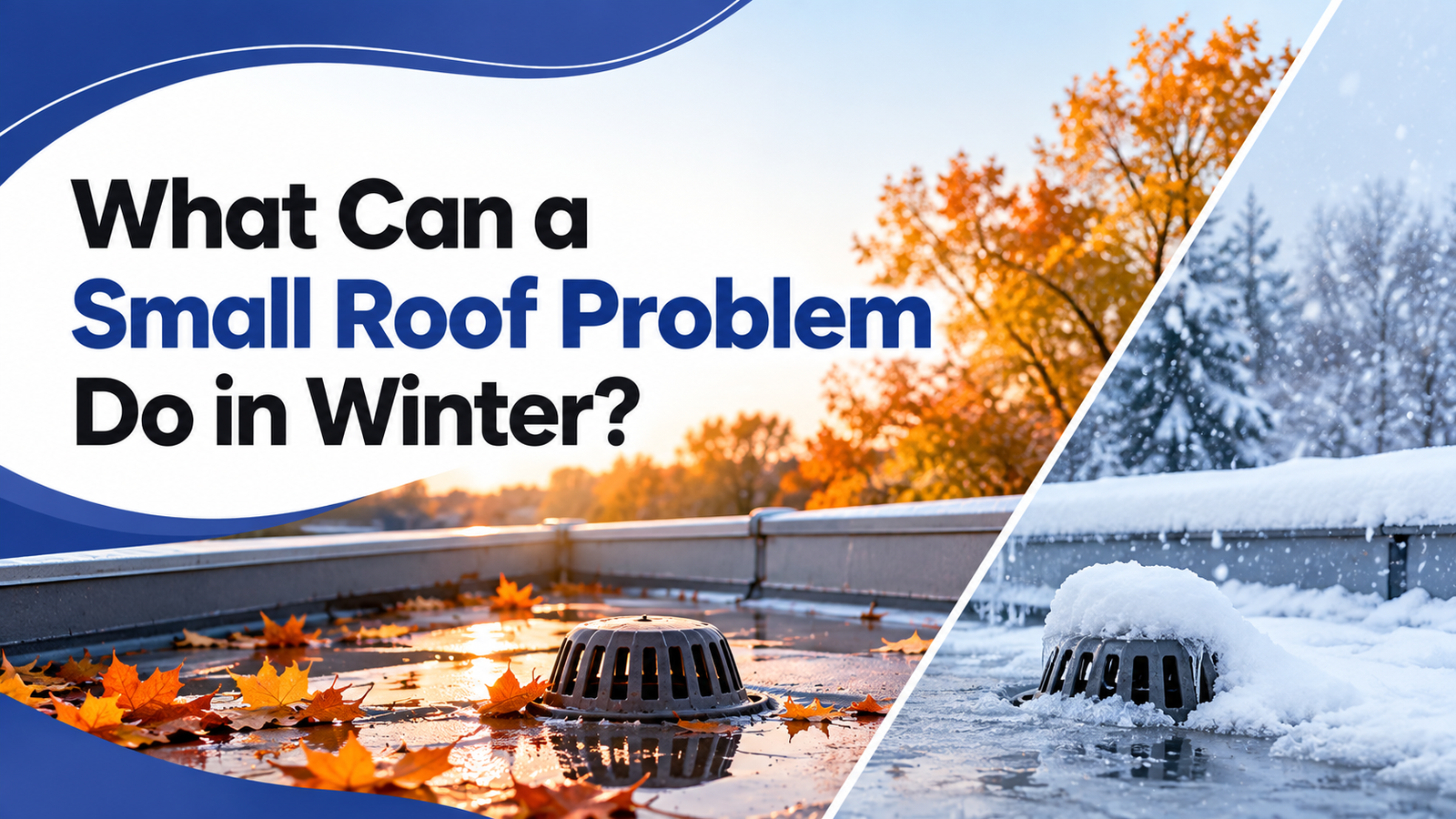
It is easy to assume that a small defect can wait. Sometimes it can.
The problem is that you may not know how that defect will behave once temperatures start moving up and down.
Take a damaged seam. Moisture gets into the opening and freezes as the temperature drops. Later, it thaws. Then the temperature drops again. This cycle can put additional stress on an area that was already damaged.
Drainage can become another concern. A partially blocked drain might cope with ordinary rainfall. When water freezes around the affected area, followed by snow and more freezing temperatures, the situation can become more difficult to manage. Even finding the problem can be harder.
Snow and ice may cover the area that needs attention, while cold weather can limit when certain repair work can safely be carried out. This is the reason winter roof preparation should happen before winter has properly settled in.
It does not mean every small defect needs to be repaired immediately. Some conditions may be fine to monitor. Others may need action.
Where the damage is limited, commercial flat roof repair may be enough. The right response depends on what the inspection finds.
A Checklist You Can Keep With the Building Records
Getting onto a commercial roof without the right training and equipment is not worth the risk. What you can do is keep useful information together so that changes are easier to notice.
Your fall records can include:
- Areas with visible cracks, punctures or splits
- Sections that look more worn than before
- Loose or damaged flashing
- Problems around pipes, vents and other penetrations
- Leaves and debris around drains
- Spots where water tends to remain
- New ceiling stains or damp patches
- Locations of previous leaks
- Older repairs
- Areas around rooftop equipment
- Photographs from the current inspection
- Previous inspection reports
The photographs are particularly useful when the roof is inspected regularly.
A section that changes slowly can be difficult to notice from one visit to the next. Put last year’s photograph beside the current one, though, and the difference may be much easier to see.
The same goes for repair records.
Six months from now, you may not remember exactly when a flashing repair was completed. You may not remember which contractor worked on a particular section either. Keeping the information together saves time when that area needs attention again.
Flat Roofs and Drainage Need a Closer Look
Flat commercial roofs are not truly flat. They have a slight slope that directs water towards drains or other outlets.
If the drain is blocked or water repeatedly collects in one area, do not ignore it. Seams, membrane transitions, flashing, and areas around rooftop equipment also need to be considered during an inspection.
The roofing material is also important to consider.
A TPO roof is not the same as an EPDM system. PVC, modified bitumen and metal roofing have their own characteristics too. The way a particular material should be maintained depends on the system installed on the building.
If you are researching flat roofing Toronto, for example, knowing the type of roofing system you have is a good place to begin. It gives you something specific to discuss when looking at its condition, repair history, and commercial roofing maintenance requirements.
Does Roof Damage Always Mean Replacement?
Not at all.
This is one of the reasons an inspection is useful. It can tell you what is actually happening instead of leaving you to guess.
A small damaged section may be repairable. A drainage issue may be limited to one location. An older area showing wear may need to be watched rather than replaced right away.
On the other hand, a roof with widespread deterioration may need more extensive work.
There is no sensible way to decide that from the age of the roof alone. The material, previous repairs, drainage, condition of the surface and extent of damage all form part of the picture.
If you are reviewing different commercial roofing services, ask for a clear explanation of the findings.
You are dealing with your building, after all. You should understand what you are paying to have repaired.
Make Room for Repairs Before They Become Urgent
A commercial building rarely has an empty schedule.
There may be trucks arriving early in the morning, employees coming and going, tenants using shared areas and equipment that needs regular access. Even a repair that only happens on the roof can affect what is happening below.
Finding out about the repair in the fall gives you some breathing room.
Instead of dealing with an unexpected leak on a busy weekday, you can look at the inspection findings and plan around the building’s normal routine.
It may be possible to schedule smaller jobs together. You ccannrrange access in advance so that the work does not interfere with deliveries or other activities.
Once the job is finished, keep the paperwork.
What Should Happen Before Winter Arrives?
There is no need to turn winter preparation into a huge project.
Start by finding out what condition the roof is in. Check the old inspection records if you have them. Look at areas that have caused trouble before, especially around drainage points and rooftop equipment.
If the inspection identifies damage that could allow water inside, discuss the repair while weather conditions are still suitable.
Clear seasonal debris from drainage areas as needed.
A major storm is one such reason. Strong winds, unusually heavy snowfall or other severe weather can damage roofing materials or rooftop equipment. If there are visible signs of damage afterwards, another inspection may be appropriate.
A Fall Inspection Can Save You a Winter Headache
It is easy to understand why roof inspections get postponed.
If the building is dry, the roof does not feel urgent. There are always other jobs waiting, and nobody wants to spend time on something that appears to be working perfectly well.
But that is also the point. You do not inspect the roof because you already know there is a problem. You inspect it because you want to find out whether there is one.
Fall gives you a useful opportunity to do that. The roof has been exposed to months of weather and activity, but winter conditions have not yet made access and repairs more difficult.
Maybe the inspection finds a blocked drain. Maybe an old repair needs attention. Perhaps a section near the rooftop equipment has started to wear.
If you are looking at flat roofing Toronto options, or simply trying to keep the roof already on your building in good shape, knowing its current condition gives you a much better starting point.
You cannot control the weather that arrives later in the season. You can, however, find out whether there are existing problems and decide what to do about them while you still have time.
For property owners who want a structured approach to inspection and commercial roofing maintenance, PWCR can be considered when arranging professional commercial roofing support. The earlier you understand your roof’s condition, the more time you have to make practical decisions before winter arrives.
