If you work in accounting or finance in Australia, you’ve probably asked yourself: will AI replace bookkeepers? Cloud platforms like Xero, MYOB and QuickBooks now reconcile bank feeds, categorise transactions and flag anomalies with barely any manual input, and that alone has convinced plenty of business owners that a dedicated bookkeeper might soon be optional.
It’s a fair question, and the honest answer is more nuanced than a straight yes or no. AI has changed what a bookkeeper spends their day doing but it hasn’t changed who is legally accountable for the numbers, who is permitted to lodge a BAS, or who catches an AI’s mistake before it reaches the ATO. Here’s what AI bookkeeping in Australia actually looks like inside a modern outsourced bookkeeping arrangement right now.
How AI Is Currently Used in Australian Bookkeeping
AI accounting automation in Australia has moved well past basic bank feeds. Most cloud platforms now use machine learning to suggest transaction coding, match invoices to payments, and surface exceptions before month-end. That’s real productivity gain but it’s narrower than it looks.
Tasks AI Handles Well
AI tools are genuinely strong at the repetitive, pattern-based side of bookkeeping:
- Bank feed reconciliation and transaction matching
- OCR-based data capture from invoices and receipts
- Rules-based coding and categorisation of recurring transactions
- Duplicate and anomaly detection across large transaction volumes
- Generating draft reports and dashboards from clean data
Tasks That Still Require Human Judgement
Where AI consistently falls short is anywhere a transaction is ambiguous or a decision carries compliance weight:
- Classifying grey-area transactions (is this GST-free, input-taxed, or taxable?)
- Interpreting Division 7A loans, payroll edge cases, or one-off adjustments
- Advising a client on cash flow or timing decisions
- Reviewing and signing off figures before they’re lodged or reported
- Picking up and correcting an AI miscategorisation before it compounds
Why Bookkeepers Are Not Being Replaced by AI
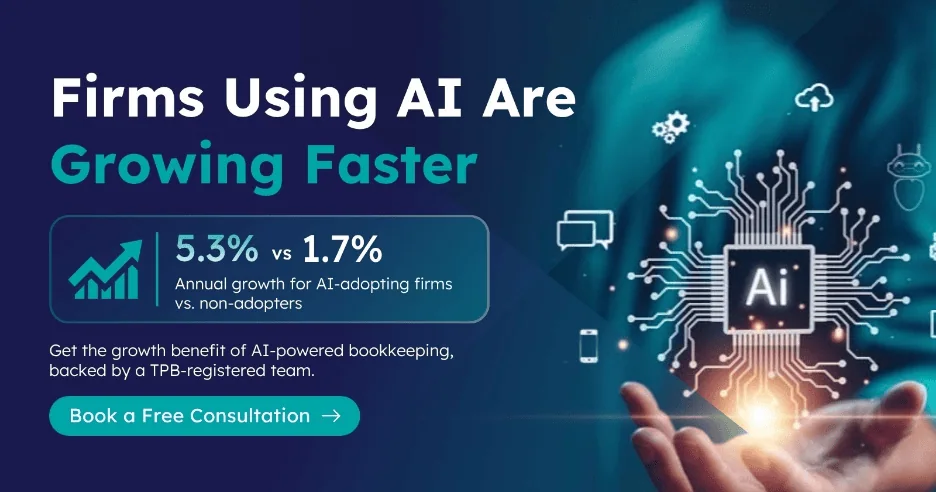
The gap between “AI can process the data” and “AI can be responsible for the data” is where the future of bookkeeping jobs in Australia is actually being decided — and it’s a wider gap than most software marketing suggests.




The Compliance and Accountability Gap
In Australia, only a registered BAS agent can lawfully prepare and lodge a Business Activity Statement on behalf of a client for a fee. To register, an individual has to be at least 18, be assessed by the Tax Practitioners Board as a “fit and proper person,” meet set qualification and experience requirements, and hold professional indemnity insurance (Tax Practitioners Board). Software cannot meet any of those tests. It can’t be assessed as fit and proper, it doesn’t carry PI insurance, and it isn’t the party the ATO holds accountable if something is wrong.
Can AI Lodge a BAS on Its Own?
No. AI can prepare the data that goes into a BAS reconciled figures, GST totals, categorised expenses but the lodgment itself, and the responsibility that comes with it, sits with a registered BAS agent or the business owner directly. This is really the crux of the AI vs human bookkeeper debate: AI is a data-processing layer, not a legally accountable one.
Curious how an outsourced bookkeeping team blends AI tools with registered oversight? Get in touch with NCSGX Australia’s outsourced bookkeeping Australia team to see how it works.
What Outsourced Bookkeeping Looks Like with AI Tools Today
Rather than replacing bookkeepers, AI accounting automation has changed the shape of outsourced bookkeeping. The routine, high-volume work is now handled largely by software, while the outsourced team’s time shifts toward review, exception-handling, and client communication.
What Changes for Businesses Using Outsourced Bookkeeping Now
For a business currently using (or considering) outsourced bookkeeping, the practical differences are noticeable:
- Reconciliation and categorisation turn around faster, since AI handles the first pass
- Reporting and dashboards can be closer to real-time rather than end-of-month
- The human bookkeeper spends more time on review, accuracy, and advisory-style input than manual entry
- Compliance oversight BAS lodgment, record-keeping standards, GST treatment still runs through a registered professional
- Cost efficiency often improves, since AI absorbs the repetitive workload without removing the review layer
How to Evaluate an Outsourced Bookkeeping Provider in an AI-Driven Market
With AI now embedded in most bookkeeping software, the real differentiator between providers isn’t which tool they use it’s how they combine it with qualified oversight. Questions worth asking any provider:
- Are the bookkeepers working on your file registered BAS agents, and are they TPB-registered?
- What software and AI tools do they use, and where does human review sit in that process?
- What’s their quality-assurance process before figures are reported or lodged?
- How do they handle data security and access controls for your financial information?
- What industry experience do they have with businesses your size or sector?
- Is their pricing based on time, volume, or a fixed scope and does that align with how much of the work is automated?
These questions matter more than ever precisely because AI has made “we’re automated” a common claim. The benefits of outsourced bookkeeping services accuracy, compliance cover, and freed-up time for the business owner only hold up if a registered professional is still accountable for what the software produces.
Is bookkeeping becoming obsolete? Not on current evidence. The record-keeping obligations businesses face under Australian tax law haven’t gone anywhere, and someone still has to be answerable for meeting them.
How NCSGX Can Help
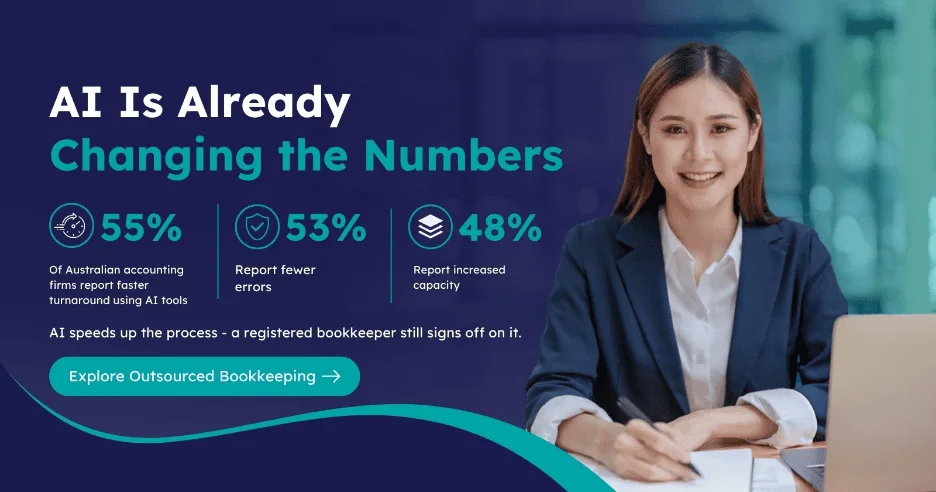
NCSGX Australia works with accounting and bookkeeping practices as an extension of their team, combining the same AI-driven tools discussed above with registered, reviewed oversight. Rather than replacing a firm’s bookkeeping function, the model adds capacity: routine reconciliation and data entry move faster, while a qualified team member still reviews the output before it’s reported or relied on.
For businesses evaluating whether to bring bookkeeping in-house, keep it manual, or lean further into automation, an outsourced partner that’s transparent about which parts are AI-assisted and which are human-reviewed tends to be the safer long-term choice particularly where BAS lodgment and compliance are involved.
Conclusion
AI has genuinely changed what day-to-day bookkeeping looks like in Australia, but it hasn’t changed who’s accountable when the numbers reach the ATO. The businesses getting the most out of AI bookkeeping right now are the ones pairing it with not substituting it for a qualified, registered professional.
Read more relevant blogs and insights to stay updated on the latest trends in bookkeeping, accounting, and financial services.
FAQs
1. Can AI lodge a BAS on its own in Australia?
No. AI software can prepare and reconcile the underlying data, but lodging a BAS on behalf of a client for a fee legally requires a registered BAS agent, who is the party the ATO holds accountable.
2. What qualifications should an outsourced bookkeeper in Australia have?
Look for TPB registration as a BAS agent, which requires meeting set qualification and experience standards, being assessed as a fit and proper person, and holding professional indemnity insurance.
3. Is it safe to rely on AI-generated financial reports without a bookkeeper’s review?
Not for compliance purposes. AI is strong at data processing but can miscategorise ambiguous transactions, and there’s no accountable party behind the software if an error reaches the ATO unreviewed.
4. How is outsourced bookkeeping different from just using accounting software?
Software processes and organises data; outsourced bookkeeping adds a qualified, accountable person who reviews that data, handles compliance obligations, and can be contacted directly if something needs judgement.
5. Will bookkeeping jobs disappear because of AI?
Unlikely in their current form. AI is absorbing the repetitive, high-volume tasks, but compliance accountability, judgement calls, and client-facing advisory work are shifting the role rather than eliminating it.
6. What should a business check before outsourcing bookkeeping to an AI-enabled provider?
Confirm the team includes registered BAS agents, ask how AI output is reviewed before it’s reported or lodged, and check their data security practices and relevant industry experience.